
CALISTHENICS
MOVEMENT
HANDSTANDS
BERG MOVEMENT APP
Calisthenics & handstand blogs & tutorials

Struggling with calisthenics injuries? Discover the real causes behind the most common pain points — and how to fix or avoid them for good. Backed by 30+ years of combined experience from a professional coach and a calisthenics medical doctor.

Learn the only calisthenics equipment worth using after 15 years of training. Understand which tools actually boost performance, prevent injury, and progress with you. It’s time to stop wasting money on cheap setups, and start protecting yourself.

The hips are an area so often neglected and can seem impossible to loosen up for a lot of us - myself included sometimes! In this piece we’re guided through an effective flow with an ex-professional ballet dancer-turned yogi, Francesca Golfetto.

Discover how I transformed from a lost teenager into a professional calisthenics athlete, coach, and entrepreneur. This 15-year journey into bodyweight strength, handstands, and life-changing discipline is packed with motivation, milestones, and lessons for anyone pursuing a stronger, more intentional life.

Everything - EVERYTHING - you need to know about using resistance bands for bodybuilding exercises, is right here. The resistance band bible has arrived.

Dozens of resistance band progressions for training calisthenics movements, from pull ups, to dips, to the front lever, planche, back lever, and more. Hope you like Backstreet Boys, ‘cause after reading this article or watching this video you’re going to be a professional band member!

Join Magnus Midtbo and I in a challenging strength building bodyweight workout with pull-ups, handstand push-ups, dips, and more, using only gym rings and resistance bands.
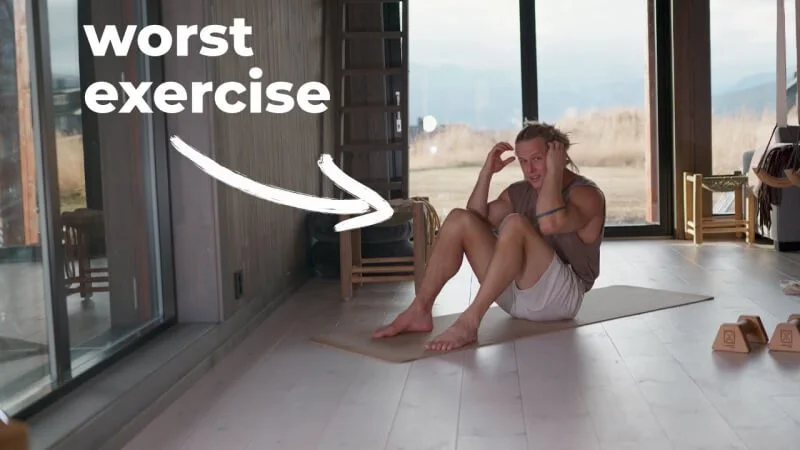
This article is for those aiming to have a strong core, something that’s so important for a lot of the movements we talk about here. I think very few people are choosing the most effective exercises to do when training core, so that’s exactly what I’m going to talk about in this article.

Backflips, helicopteros, 540s, corkscrews: all amazing moves, but where the heck does one start if they want to do one? It all starts with knowing the foundations: jumping, rolling, twisting, and more. In this article I lay out all the skills you need to learn and give you a bunch of progressions to to work on, so that you can set your acrobatics journey in motion.

Compared to what’s already on the market, the Movement Made rings stand apart. From the manufacturing process, to the way they’re put together and set up; to how they fold neatly for packing; the new buckle system which allows you to use the straps without doubling them for extra-high anchor points, and more.

Let me walk you through what I believe is the most efficient and effective way to use gymnastics rings for a complete bodyweight workout.

You really only need to work through a short list of essential exercises to work your entire body and, with rings, it’s made easy. In this article I’m going to go over 5 staple exercises you can do with the rings, as well as ways to make those exercises easier or harder, depending on where you’re at with your fitness.

After seeing Matthew Smith guide our mutual friend Theo into performing the side split in just A SINGLE SESSION(!), I knew I had to invite him to my channel to share his knowledge with you guys, so this tutorial is all about getting down into the side split.

A lot has happened since since the release of The Movement Trybe App. The content inside the fitness app has both improved and expanded. There are now 40+ different calisthenics, handstand and movement programs, 100+ workouts and 1200+ exercises and progressions.

Anyone can learn to handstand! Learning a handstand from scratch and becoming comfortable upside down by conditioning your fear of falling from a handstand; building up to the required strength; and developing awareness of your body in terms of your spine, your pelvis, your legs, and your overall stability - these are the foundational building blocks to getting started on your handstand.

Beyond the obvious - building up to the required strength and balance to be able to perform the one arm handstand (OAHS) - there are certain things I think will be helpful to keep in mind for anyone training towards their one arm handstand (OAHS). In this video tutorial I will go over the 5 one arm handstand mistakes I see people making most often. I believe that, if you are able to keep these common mistakes in mind and gain control over them, your training towards the one arm handstand (OAHS) will be made more efficient and effective. OAHS mistakes mentioned in this article:
You’re not strong enough to start your one arm handstand training
You’re handstand is not good enough to start the OAHS journey
You’re egocentric in your one arm handstand training
You think the full one arm handstand is easier than the straddle
You’re not using the wall in your one arm handstand training

In this beginners guide to one arm handstands we dive into some super practical and immediately applicable drills and progressions to incorporate into your One Arm Handstand training. We go over a full list of entry drills - that is, drills that work on our shift from two hands to one - and then we move on to freestanding hold drills. Throughout the piece you’ll also find super handy tips that will help you on your one arm handstand journey. By the end of the post, I’m confident you’ll walk away with at least a few things that will help you reach the OAHS.

After reading this piece you should have a clearer perspective on your approach to the One arm handstand (OAHS), as well as some practical tips you can apply to your OAHS training which will make it more effective and efficient. I’ll cover my recommended form cues regarding shoulder positioning, hip positioning, and more, as well as certain things I think you should steer clear of when approaching the One arm handstand.

This is a straightforward path you can take to learn the human flag. In it you will find all of the human flag progressions you need, from beginner to advanced, that you need to learn on your human flag journey.

Using a resistance band is one of the the best way to approach training for the planche. It will provide you with measurability, specificity and injury prevention for your planche training. I’ll go over several different band-assisted planche variations and progressions, and the things you need to be aware of and keep in mind when training planche with resistance bands.

Whether you’re 10 years old or 35 years old, there’s a good chance that if you see someone doing a backflip, you think to yourself, “I wanna be able to do that”. In this tutorial, myself and Theo are going to go over everyyyyything you need to learn to backflip, so that you can finally make your childhood backflip dreams come true.

A handstand isn’t JUST about balancing on your hands. You need the proper head and hand positioning, shoulder positioning, hip and spine positioning, and more. In this article we cover shoulder positioning. Proper shoulder positioning will greatly help your handstand become more efficient and effective. Here we cover the three form cues that are crucial for proper shoulder positioning: shoulder elevation, shoulder flexion, and internal rotation.

The goal of this article is to dispel a few common myths regarding handstands. Taking these myths into consideration, we are able to have a clearer perspective on how to view our handstand journey, as well as train for it more effectively and efficiently.
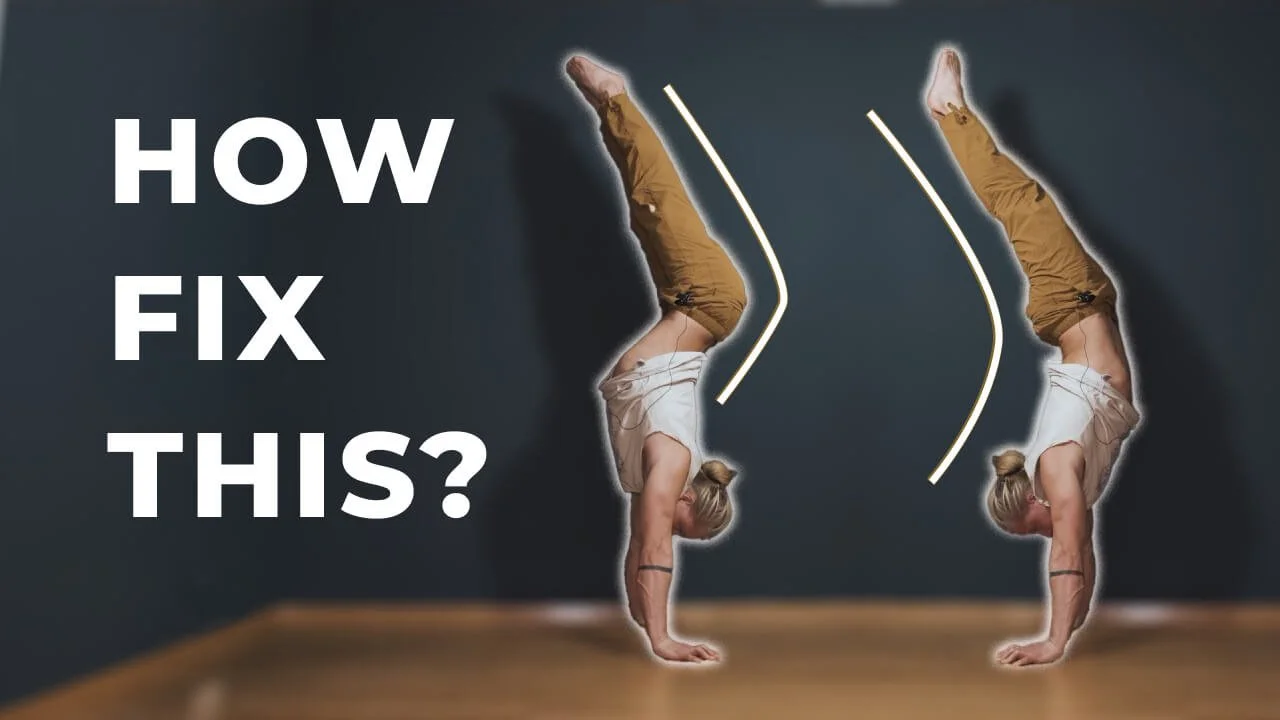
In this final piece to the handstand puzzle, we will go over how to achieve the correct hip and spine positioning to get your handstand form to perfection. The reason I’ve put hip and spine positioning together is because you can’t really work on one while ignoring the other, especially when upside-down in a handstand. Once you've got this and the previously-covered form cues down, you are ready to put together a perfect handstand.

In this article I am going to go over my most helpful tips for mitigating our risk of wrist injury. I will go through specific stretches, exercises, and alternative training methods for reducing the load you put on your wrists. I will teach you how to prevent wrist injury as well as work with wrist injury.

In this Tuck Planche tutorial I will teach you practical tips on how to perform the movement, what muscles to tighten, and what to do and think about while you are doing the Tuck Planche. I will also teach you technical drills that will help you learn the Tuck Planche faster, as well as strength drills that will help you develop the relevant strength for this skill.

The difference between people who make it far in handstands and calisthenics and those who don’t, is how well those people manage their injuries. Cause let’s face it - everyone doing high level athletics will get injured. In this article, I’m going to give you 10 helpful tips on how to deal with injuries particularly related to calisthenics and handstands. Of course, preventing injury in the first place is ideal. But, when that is a foregone conclusion, we must learn to manage our injury.

In this tutorial I will simplify the handstand kick up, the must-know handstand entry for all movers. In other words, I want you to think about as few steps as possible when entering the kick-up, and still perform it as effectively as possible. We will cover the steps for entering the kick up, form cues to keep in mind, and drills for training your kick up.

What kind of sets you use can make a difference in your motivation, as well your ability to break through plateaus. In this piece we are going to cover a whole bunch of them, so buckle up! While you may already be familiar with a few of the set types covered in this piece, I am confident you will pick up at least a couple new helpful ways to switch up your set/rep scheme to help you break through plateaus and force progress.
Calisthenics & Handstand community forum
Latest forum topics:
Build muscle and strength anywhere with these 10 best bodyweight exercises — no gym required. Includes progressions for beginners to advanced athletes.